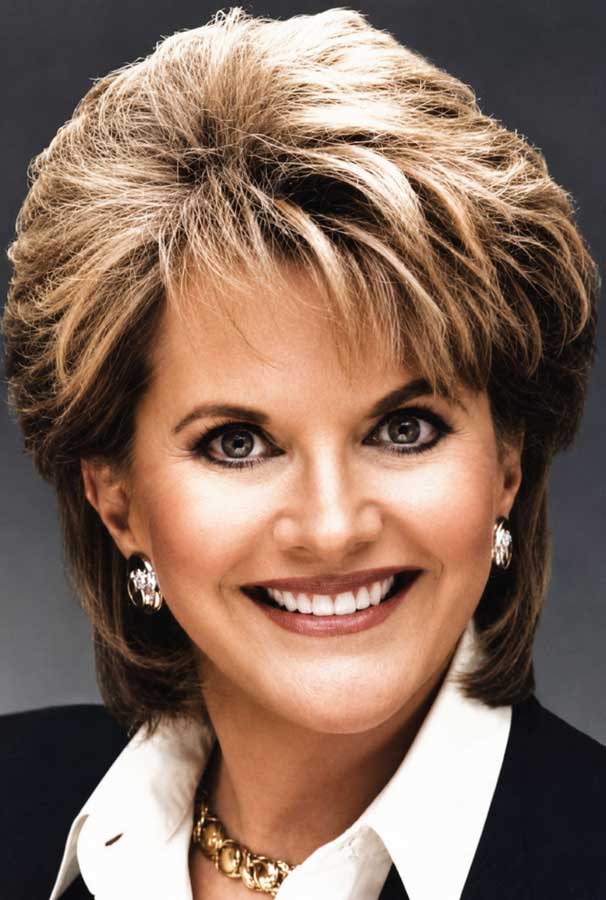
About Kelly Lange
Kelly Lange's story is the kind that feels almost too cinematic to be true: a young woman from New York, trained in literature and headed toward teaching, somehow finds herself in California, then in a helicopter over Los Angeles traffic, then behind one of the most important news desks in the country.
But that is Kelly Lange's path. Not a straight line. Not an easy one. And certainly not an ordinary one.
Born Dorothy Scafard in New York City, Kelly grew up in a world very different from the one she would later help shape. The public record does not offer many intimate details about her childhood, which is worth saying honestly. But what we do know suggests someone who valued language, performance, intelligence, and presence from an early age. She went on to attend Merrimack College in Massachusetts, where she studied Shakespeare, a detail that says more about her than it may seem at first glance.
Shakespeare is not light reading. It asks a person to understand ambition, grief, betrayal, humor, timing, power, and human nature. Those same instincts would later serve Kelly in two very different careers: first as a journalist watching real-life drama unfold in Los Angeles, and later as a novelist creating mysteries of her own.
From New York to California
In the mid-1960s, Kelly moved west to California. At the time, her plan was not to become a television trailblazer. She came to pursue a teaching credential, a practical and respectable path. But life has a funny way of handing people opportunities disguised as accidents.
In 1967, while working as a model, Kelly noticed a line at a Buena Park shopping mall. She joined it because she thought they might be giving something away. In a way, they were. The line was for applications to become one of two "Ladybirds" for KABC radio, women who would report traffic and weather from helicopters above Southern California.
Kelly was chosen.
It was a strange, glamorous, imperfect beginning. Her on-air name was "Dawn O'Day," while the afternoon reporter was "Eve O'Day." The silver-lamé image of that early job sounds almost comic now, and by modern standards it carried more than a little of the era's sexism. Women in broadcasting were often treated as a novelty, an accessory, or a marketing idea before they were treated as serious journalists.
But Kelly did something important with that opportunity. She turned the novelty into a doorway.
From a helicopter high above Los Angeles, she began learning the rhythm of live reporting. She watched a massive city move beneath her. She learned how to speak clearly in real time, how to stay calm, how to describe what mattered quickly, and how to earn trust from listeners who relied on her voice to understand the road ahead.
Becoming a Los Angeles Television News Pioneer
That early experience led to television. In 1971, Kelly joined KNBC in Los Angeles as a weather forecaster. At the time, local television news was still a male-dominated world, especially in major markets. Women were present, but they were not often given the authority, visibility, or credibility that male anchors received by default.
Kelly had to earn what others were handed.
She began on the weather desk, but she did not stay boxed into that role. She appeared on Sunday, a KNBC weekly features program, and continued building her reputation as a smart, composed, capable broadcaster. By December 1976, she had moved into the anchor chair, becoming the first woman to serve as a nightly news anchor in Los Angeles.
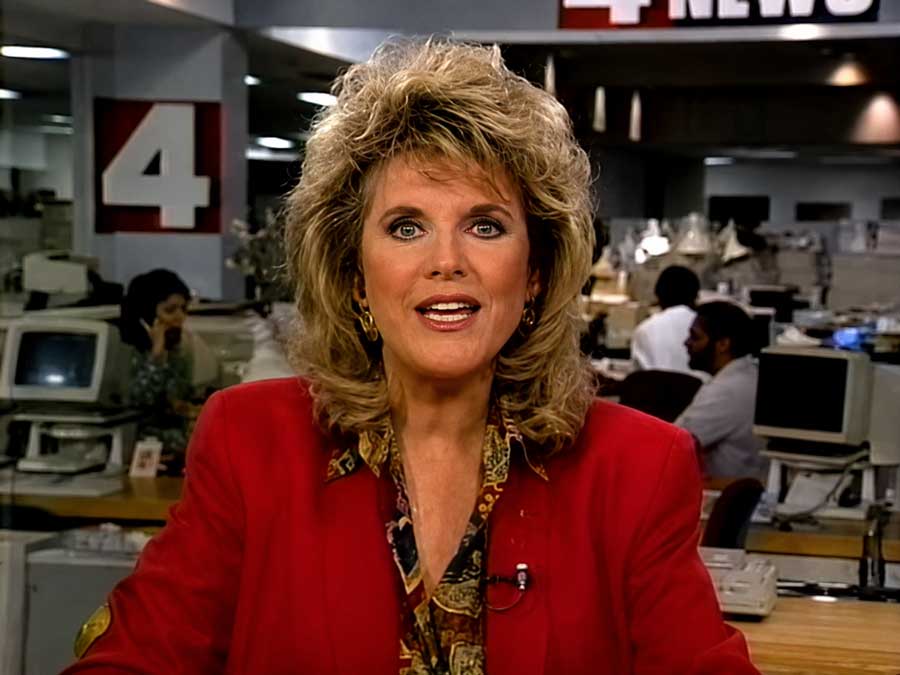
That milestone matters.
Today, viewers are used to seeing women anchor major newscasts. But Kelly's rise happened in a different era, when the presence of a woman in that chair challenged assumptions about who could deliver the news, who could be trusted, and who belonged in the center of the public conversation. She was not simply reading headlines. She was helping change the visual language of authority in American television.
For more than two decades, Kelly became a familiar and trusted presence in Los Angeles homes. She co-anchored KNBC's weeknight news programs with several major broadcast figures, including Paul Moyer, Jess Marlow, John Schubeck, Jack Perkins, John Beard, Keith Morrison, and Chuck Henry. In a city built on image and performance, Kelly's strength was not flash. It was steadiness. She had poise without coldness, intelligence without pretension, and enough warmth to make viewers feel like they knew her.
That kind of trust is hard to build and easy to underestimate.
The Pressure Behind the Camera
Television news can look polished from the outside, but the work is demanding. The hours are long. The pace is relentless. The public sees the finished broadcast, not the pressure behind it. Kelly worked for years on the late news, including the 11 p.m. broadcast, a schedule that can wear on anyone. She later began writing fiction partly as a way to deal with insomnia from those late-night hours.
That detail is one of the most human parts of her story.
Out of the exhaustion of television news came a second creative life.
Kelly did not leave storytelling behind when the cameras turned off. She went home and wrote. Her first novel, Trophy Wife, was published by Simon & Schuster in 1995. It was followed by Gossip, and later by the Maxi Poole mystery series: The Reporter, Dead File, and Graveyard Shift. In those books, Kelly brought readers into worlds she understood well: media, fame, ambition, pressure, secrets, and the complicated machinery behind public lives.
The Maxi Poole books are especially fitting because they center on a fictional television news anchor. Kelly knew that world from the inside. She knew the personalities, the deadlines, the egos, the adrenaline, and the strange loneliness that can come with being recognized by thousands of people who do not really know you. Her mysteries gave her the freedom to explore what the evening news could only hint at: the stories behind the story.
Awards, Recognition, and Legacy
Over the years, her work received significant recognition. She won multiple Emmy Awards and was later honored with the Golden Mike Lifetime Achievement Award by the Radio and Television News Association of Southern California. Those honors reflect a career of substance, but her larger legacy is bigger than awards.
Kelly Lange helped make room.
She helped make room for women in serious broadcast journalism. She helped make room for a different kind of authority on Los Angeles television. She helped make room for women to be more than the "weather girl," more than the novelty, more than the face placed beside a male anchor. She showed that a woman could carry the news, command the desk, and hold the trust of one of the largest and most competitive media markets in the country.
And then, after all that, she made room for another version of herself.
Journalist. Anchor. Host. Novelist. Storyteller.
Kelly Lange's life is not just the story of a woman who broke a barrier. It is the story of someone who kept moving forward, even when the path changed. She began as Dorothy Scafard from New York. She became Dawn O'Day in a traffic helicopter. She became Kelly Lange, one of the defining faces of Los Angeles television news. Then she became an author, turning years of observation into mystery, suspense, and character-driven fiction.
Her story is elegant because it is earned.
It is not a story of overnight success. It is a story of timing, talent, reinvention, and quiet persistence. It is about stepping into rooms where expectations were already set and changing those expectations by doing the work well. It is about using intelligence and composure as power. It is about surviving the pressure of public life without losing the creative spark that started somewhere much earlier, perhaps in those Shakespeare pages, where every character is trying to become who they are meant to be.
Kelly Lange became many things in one lifetime.
And in each chapter, she found the story.
Research Notes & Sources
The sources below informed this biography. Each opens in a new tab.
- Hachette Book Group: Kelly Lange Author Page
Confirms Kelly Lange as an American journalist and the first woman nightly news anchor in Los Angeles.
Credibility 9/10
- Los Angeles Times: Kelly Lange Is Leaving KNBC After 27 Years
Confirms her KNBC tenure, start as weather forecaster in 1971, departure in 1998, and dehydration-related hospitalization context.
Credibility 9/10
- Los Angeles Times: Wonder What She Does After the Late News?
Confirms her first novel, Trophy Wife, and her transition into mystery writing while still anchoring.
Credibility 9/10
- Women's Activism NYC: Kelly Lange Profile
Summarizes her birth name, New York background, Merrimack College, KNBC career, Emmy recognition, and 2010 Golden Mike Lifetime Achievement Award.
Credibility 7/10
- FictionDB: Kelly Lange Bibliography
Confirms her book list, including Trophy Wife, Gossip, the Maxi Poole series, and Pancakes for Dinner?.
Credibility 7/10
- Wikipedia: Kelly Lange
Useful for cross-checking timeline details, including birth name, early KABC Ladybirds role, KNBC promotion, co-anchors, later KCBS role, and personal details.
Credibility 6.5/10